
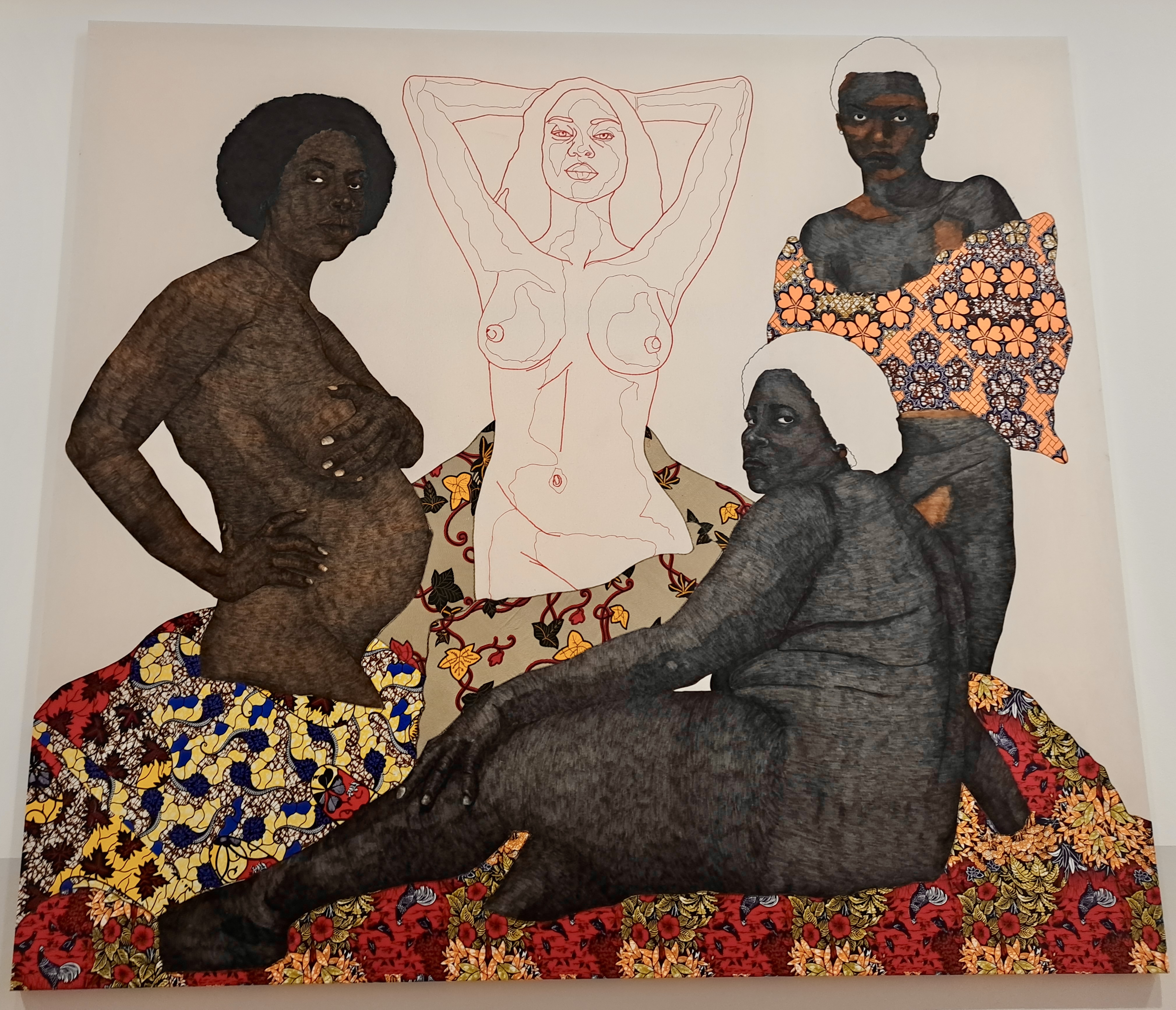
I, Woe-man

There are artists I love whose work I simply cannot understand. No matter which way I look at a piece, upside down, horizontal, far away, I cannot decipher the intended meaning within the object. The name given to a piece can be a cheat sheet, but often I find them to be disingenuous in taking away my free interpretation. Therefore, when I come across terms such as ‘feminist art,’ I scratch my head. What is the intention of such a moniker? To separate women from art, or art from women? Ostensibly the reason behind the label is to empower the XX artist, yet too often I find it excludes.
Simone de Beauvoir said, ‘one is not born a woman, but becomes one,’ a statement that is no truer today than the day Eve was created from Adam’s rib. We women are made by the circumstances in which we are bred and nurtured. To simply enter this world a biological female is the clay, how we are molded, shaped and thrust upon the wheel of life is what incubates the strength that is inherently feminine. That mystique that prepares us for survival. There is no world more vicious to a woman than the world of art. Barbara Kruger was spot-on when she created Your Body is a Battleground. Men have spent eternity placing us on shelled pedestals as beatific beings. Creatures to be worshipped and ordered. They’ve made millions from representing us as they see us, only to cast us aside when they’ve spent their load. It is therefore no surprise, when we women use art as catharsis we are silenced for the comfort of the male gaze. Somehow to speak of our pain, of our struggle is to crack that perfect peach-hued vision male artists have made and in turn the princely narrative they bestow upon their existence.
I do not understand the work of Louise Bourgeois, but I love her. Her Spiders are a marvel of technique, and her blood stained paintings reek of feminine expulsion. The majority of her work-except for the obvious representations of men and women—is sadly lost on me, especially when you read the thousand and one interpretations of what she’s trying to say with a block of wood. What I love about Bourgeois is Louise; the woman who flagrantly created work that was deeply personal. Yes, Dame Tracey shared her messy bed, but there’s something mournful and hopeful in Bourgeois’ depiction of trauma. The rawness of the materials and the esoterism of the shapes, shows just how complicated it is to verbalise the harm that’s been done to us. How do I convey the eternal burden of parental abandonment? I write a labyrinthine tale whose various dead ends and thoroughfares accurately depict the continual strife of forming attachment as an adult woman. How did Bourgeois express anger at her father’s duplicity? She created a womb being voraciously desecrated by its offspring.
Louise Bourgeois stood away from labels, never calling her work feminist. I didn’t know her, and under no circumstances will I speak for her, but I’d like to think she held that stance because she understand that being a girl, woman, lady ain’t easy. Three Six Mafia’s ‘it’s hard out there for a pimp,’ always reminds me it’s really hard out there for a woman. It doesn’t matter what you do and how well you do it, someone’s always trying to take ownership of your being. And the only way to be heard is to find subversive ways of communicating. That’s why art exists, so that every single one of us, man, woman, the beautiful third sex, can express what conformity vehemently wishes to shush. A label is only the description of what they want you to believe. The piece should speak to you itself. I am not a feminist. I’m too poor to have the luxury to theorise, I have to do. I am a woman who doesn’t consider my work feminist, I consider it work.
*Image: Impartiality, Pierre Mukeba. National Gallery of Victoria, Melbourne*

